
We’re sharing a solution to the Navier-Stokes Millennium Prize Problem, one of the deepest problems at the frontier of mathematics.
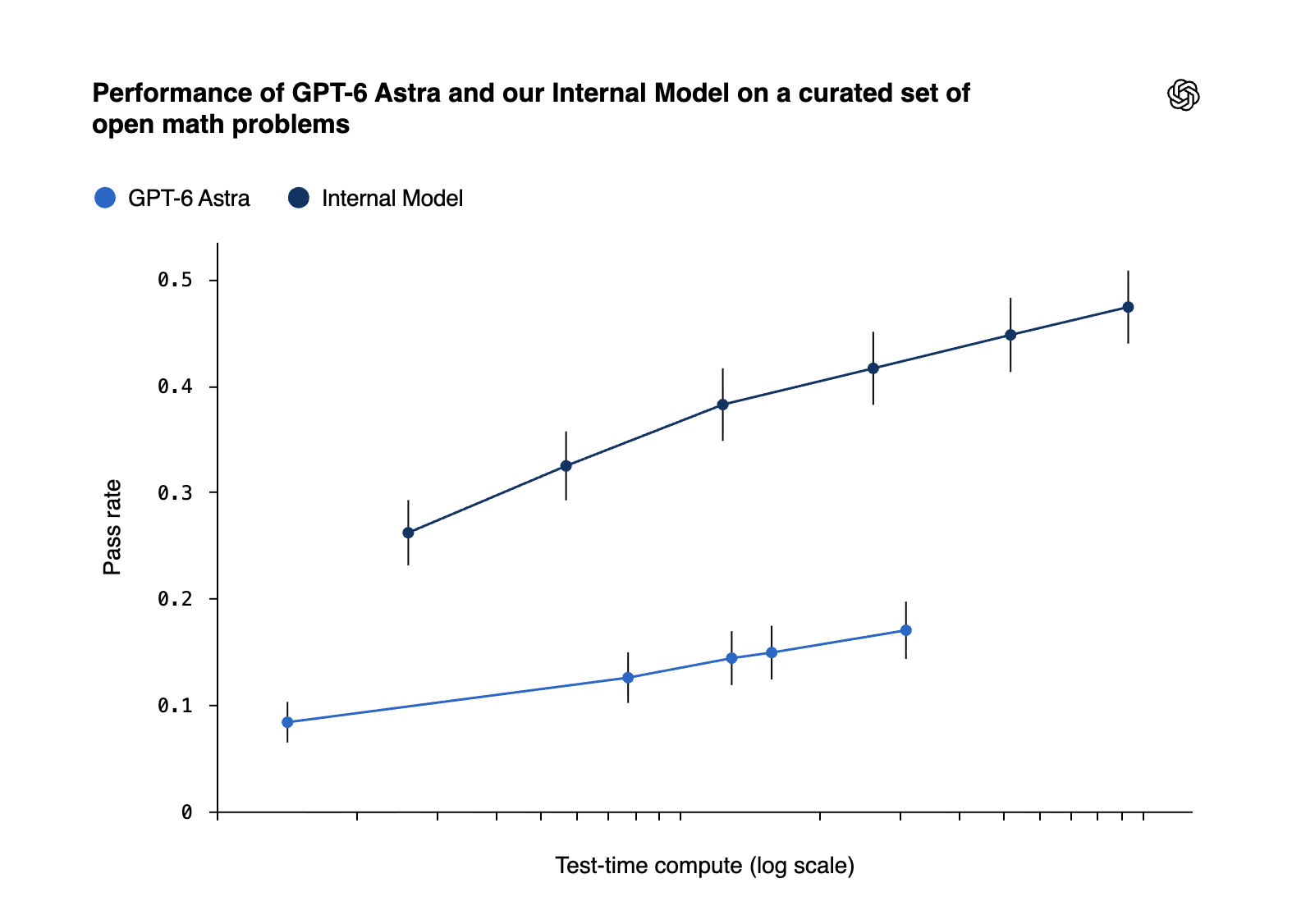
The proof was produced by a group of agents, using an OpenAI next-generation model significantly more capable than GPT-6 Astra.
The problem concerns whether the description of smooth three-dimensional fluid motion modeled by the Navier-Stokes equations can break down. It has remained unresolved for roughly 90 years.


OpenAI
@OpenAI
This model represents a step-function improvement on many benchmarks, and its training is ongoing.
Our internal model group arrived at the Navier–Stokes solution in 88 hours, using around 10,000 coordinating AI agents.
Throughout the effort, we maintained the strict safeguards—including monitoring and isolation—that we apply to all our frontier evaluations.
Our internal model group arrived at the Navier–Stokes solution in 88 hours, using around 10,000 coordinating AI agents.
Throughout the effort, we maintained the strict safeguards—including monitoring and isolation—that we apply to all our frontier evaluations.
5:20 PM UTC · Sep 8, 2026 · 3.1M Views
1925199.8K955

OpenAI
@OpenAI
The group produced an analytical proof and Lean formalization that via Navier-Stokes dynamics a fluid can develop a singularity in finite time.
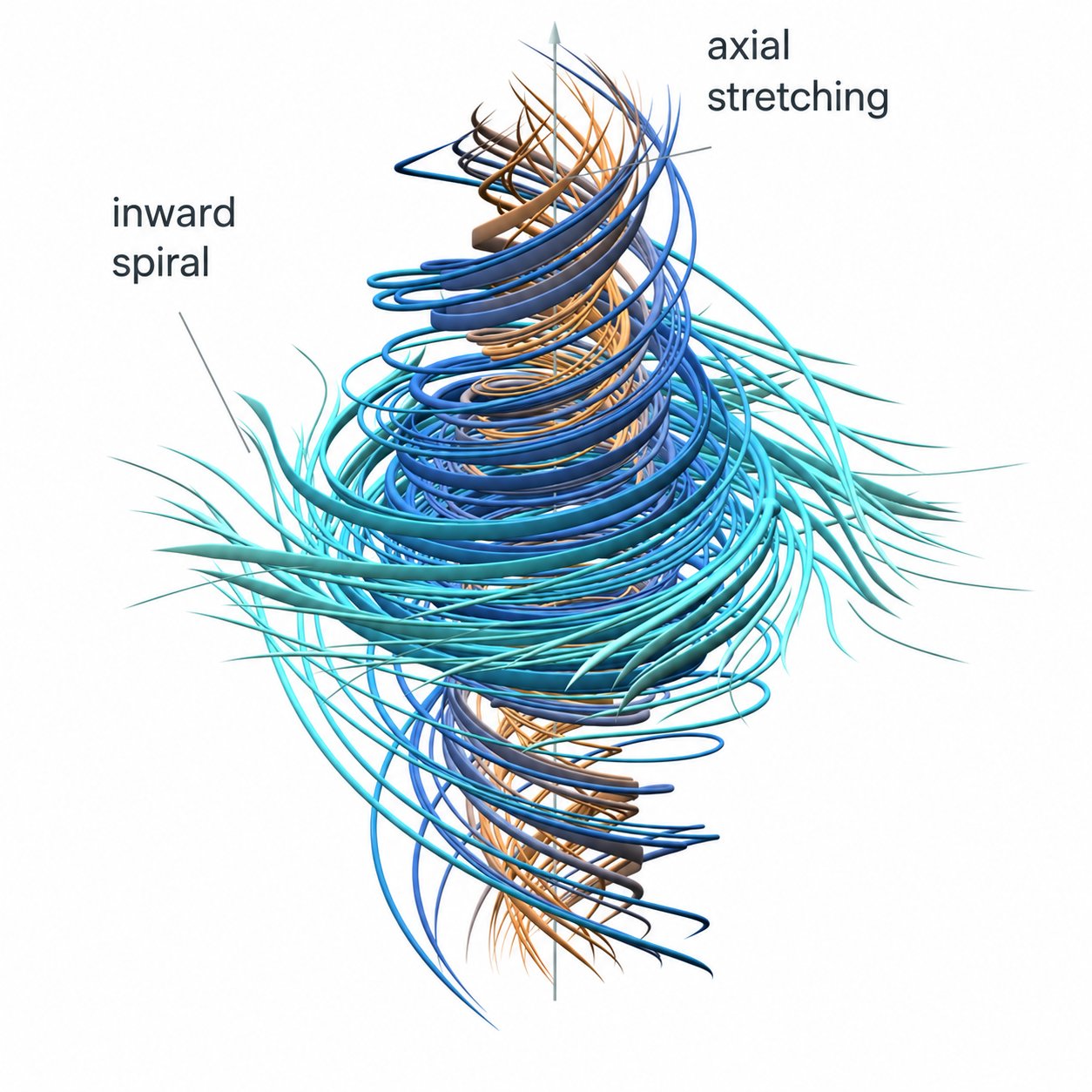
The solution is a vortex, a spinning swirl of fluid, that spirals inward and gets increasingly elongated, like spaghetti.
cdn.openai.com/pdf/32d9f210-8b73-45e0-9…
The solution is a vortex, a spinning swirl of fluid, that spirals inward and gets increasingly elongated, like spaghetti.
cdn.openai.com/pdf/32d9f210-8b73-45e0-9…
5:20 PM UTC · Sep 8, 2026 · 1.7M Views
912965.7K793

OpenAI
@OpenAI
We are focusing on understanding this model, and using what we learn to help us guide and pace how we pursue further advances in capability.
Our goal is to build AI systems which are steerable, accountable, and connected to people, which may require more deliberate choices about the pace of progress, as we continue our mission to ensure AGI benefits all of humanity.
openai.com/index/navier-stokes-solution/
Our goal is to build AI systems which are steerable, accountable, and connected to people, which may require more deliberate choices about the pace of progress, as we continue our mission to ensure AGI benefits all of humanity.
openai.com/index/navier-stokes-solution/
5:20 PM UTC · Sep 8, 2026 · 1.8M Views
1192254.8K708